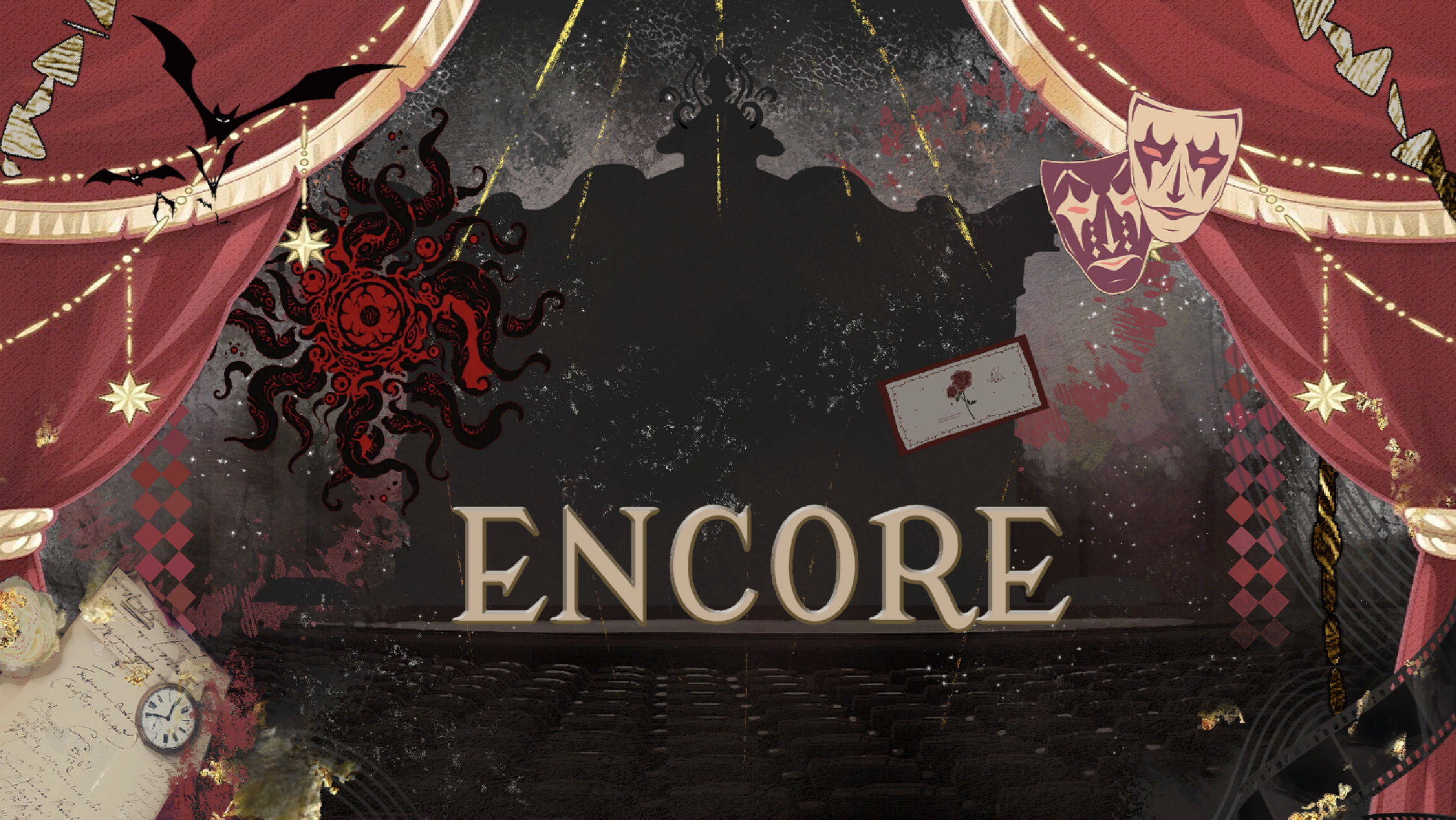
Encore
Encore.
A ritual of applause performed by those who refuse to let go.
It is the human obsession with a "perfect ending".
A desperate grasp for closure in a world of fragments.
Category: 2D, Single Player
Genre: Turn-Based Card Strategy, Deckbuilder, Roguelike
My Role: Game Designer, Artist, Programmer
(This is a Thesis project, still in progress, will be done by mid May)
Game Summary
Encore is a single-player, turn-based card game about desire, control, and the illusion of completion.
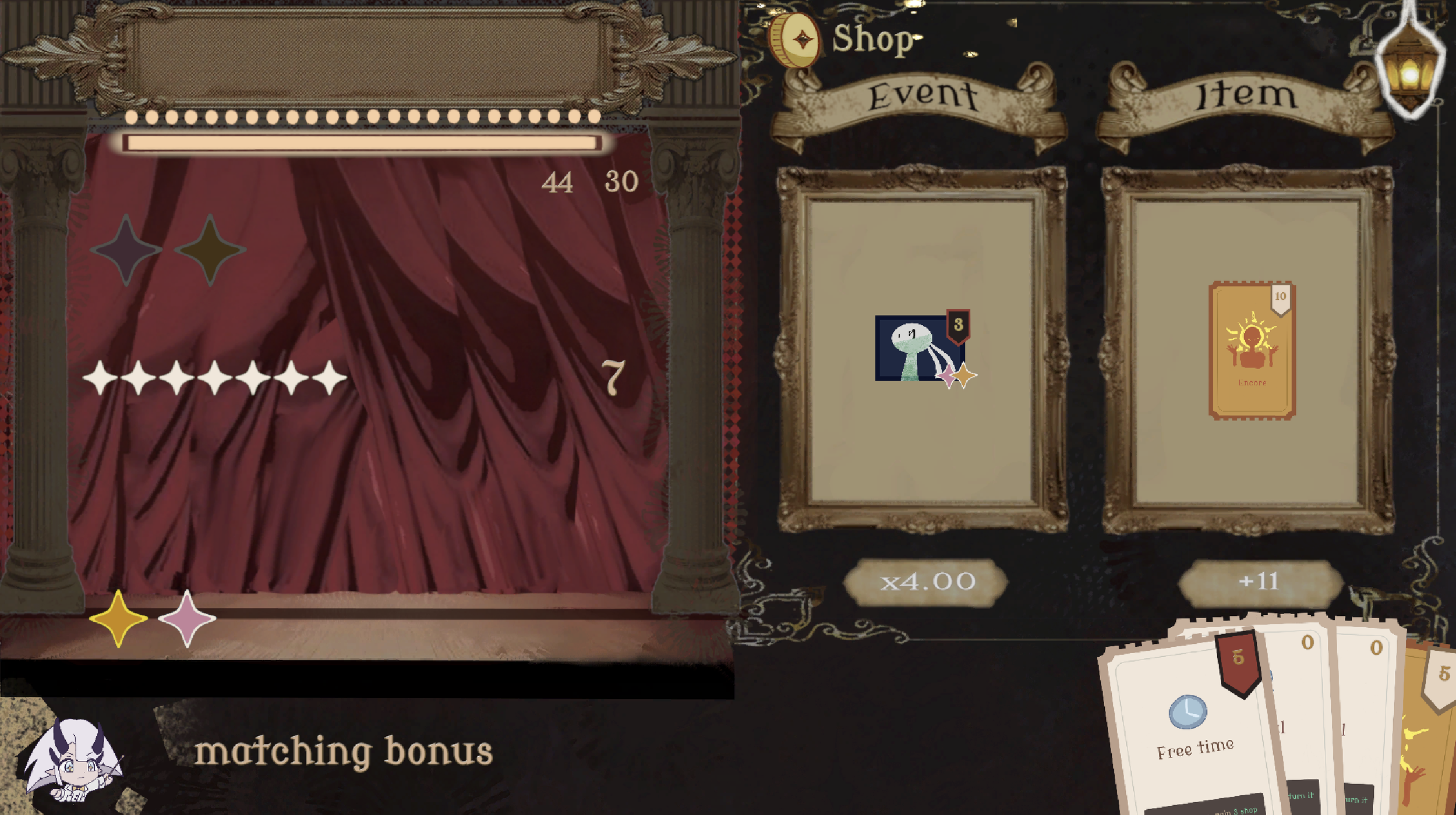
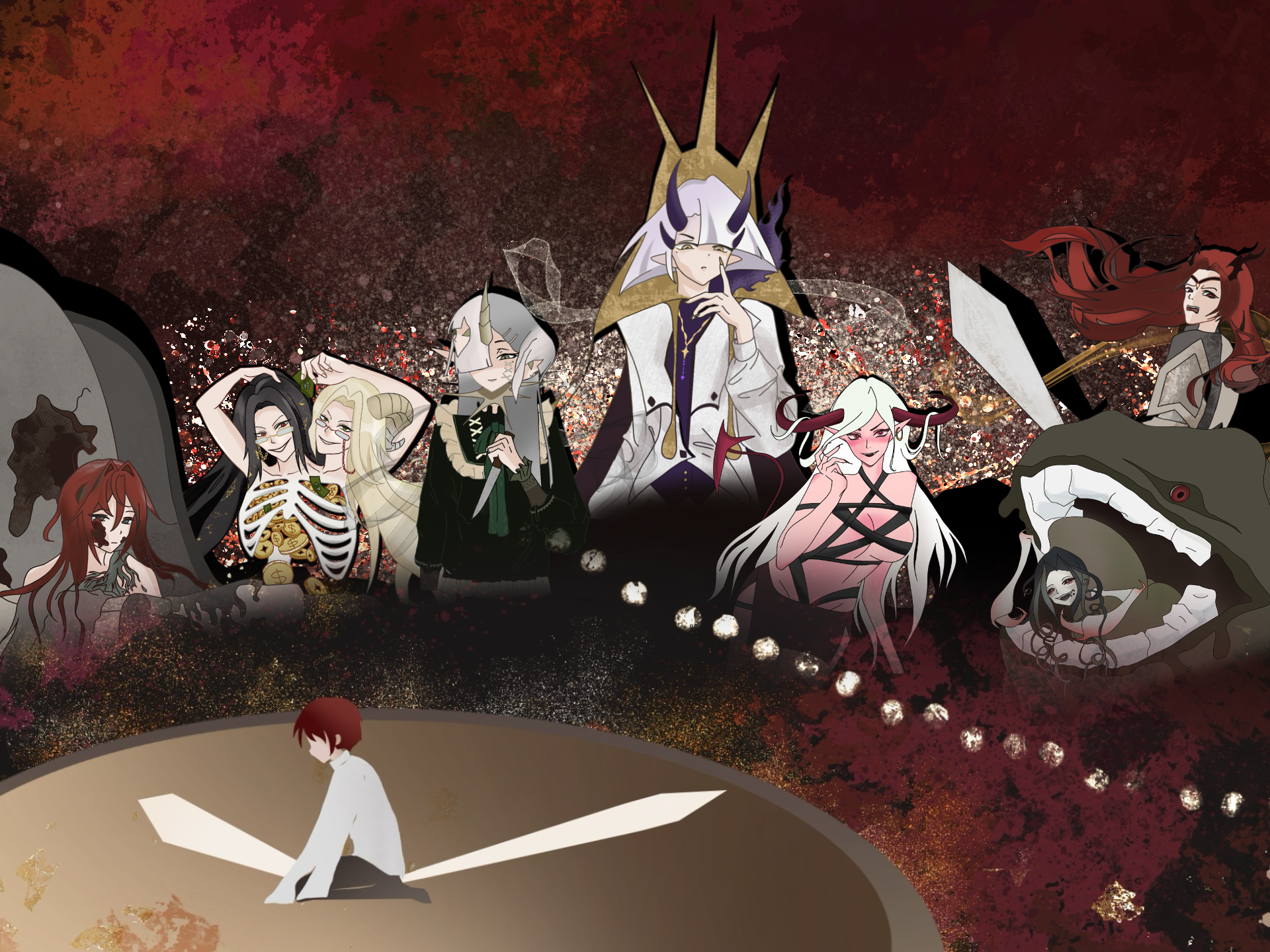
You return to a broken theater once governed by order—one ticket, one show. Now, the stage is occupied by seven personified desires, each demanding satisfaction on their own terms. By selecting Events and collecting Items, you construct a score through a multiplicative system to meet each desire’s ever-shifting expectations.
Every round is a performance. Every choice is a compromise.
Pursue efficiency, and risk collapse. Indulge desire, and lose control.
There is no perfect ending—only another encore.
Design Pillars
Desire: Mechanism, Narrative, and World-Building
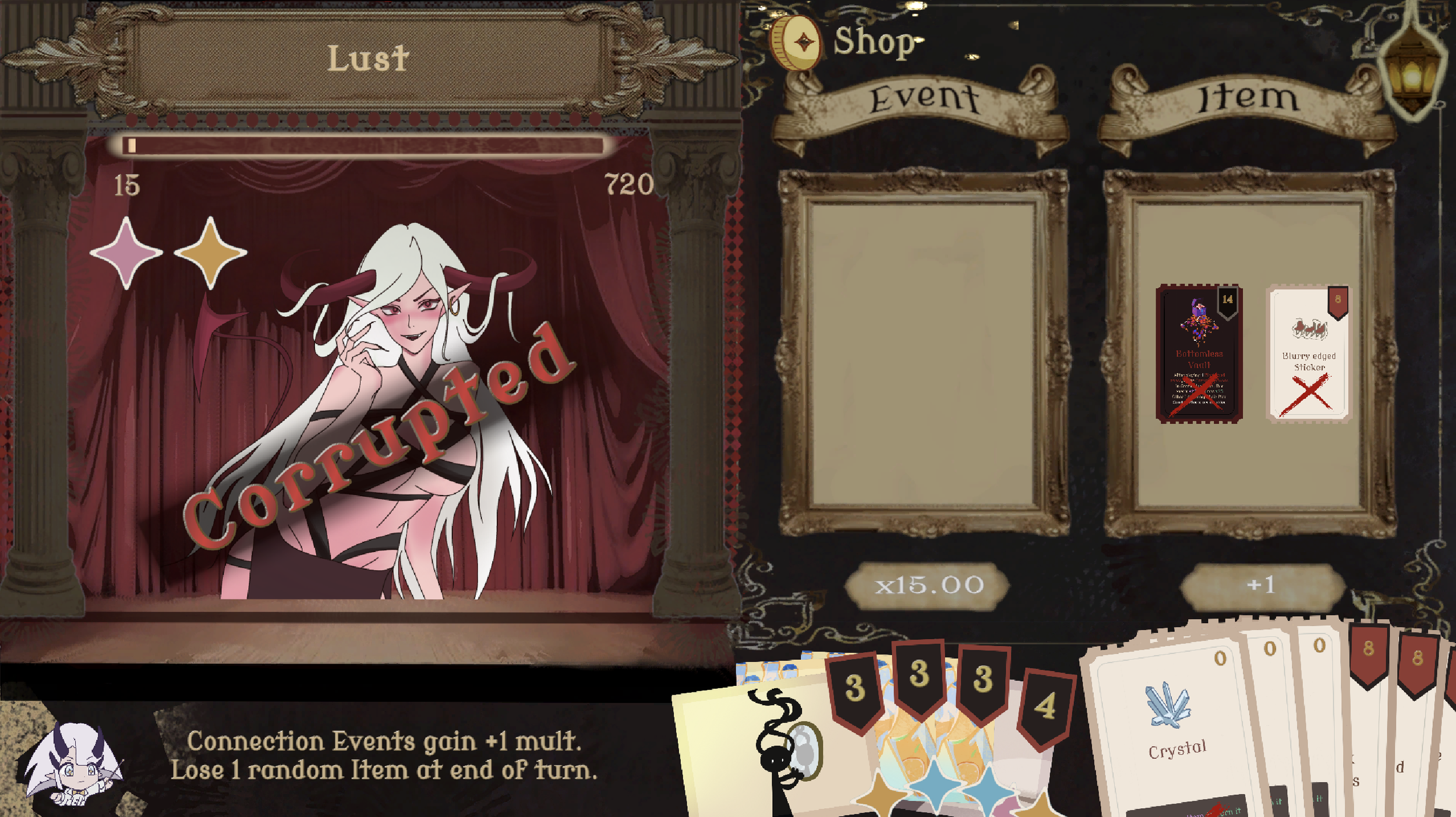
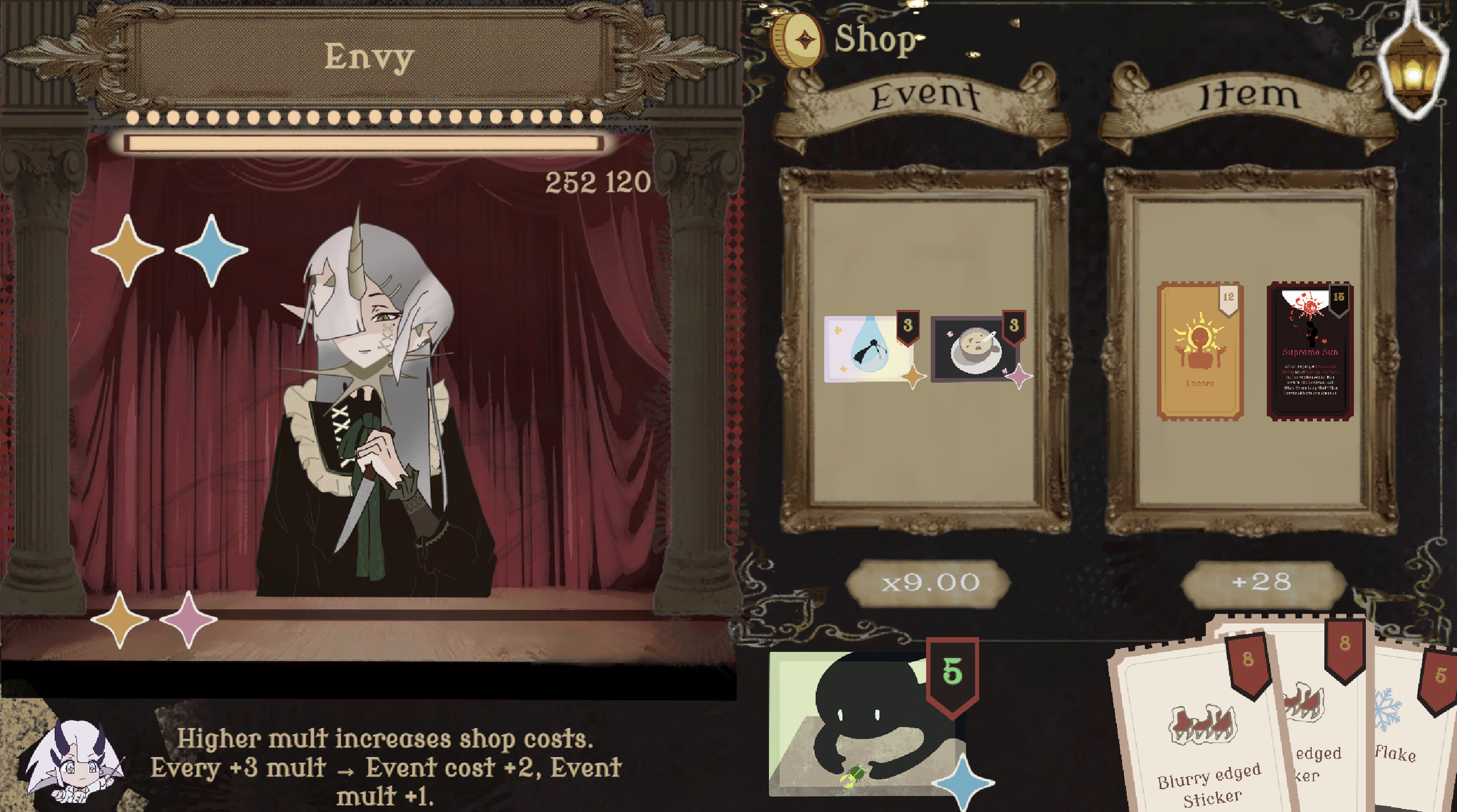
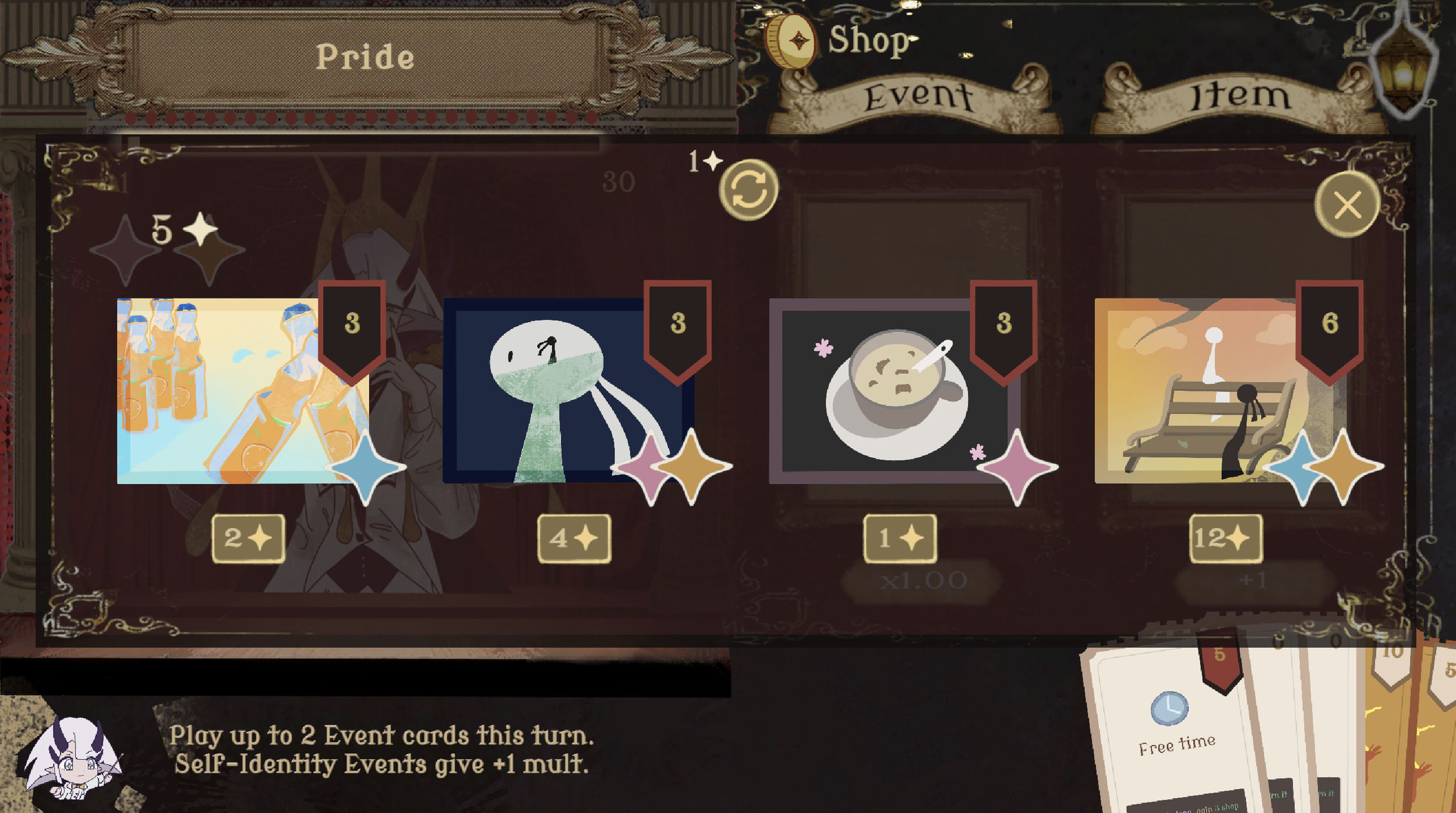
In this system, "Desire" is more than just flavor text, it is the primary engine that drives gameplay. Each Desire functions as a set of meta-rules that can fundamentally reshape the economy, scoring logic, and constraints of a run. Players are directing a theatrical performance where the mechanics themselves adapt to the narrative intent of the chosen Desire.
Temporal Resource Loops and Emergent Synergies
We have collapsed deferred gratification and combo discovery into a single strategic layer to deepen the decision-making process. Items are generated via Events but only enter the playable pool in future cycles. This forces players to manage "future inventory," effectively shifting the focus from tactical reaction to long-term deck building. This delay creates a window for players to set the stage for high-impact synergies. As the difficulty floor rises, the player must transition from playing individual strong cards to engineering multi-turn "payoff windows" where deferred items and active events intersect and form combos.
Systemic Mutation via Overindulgence
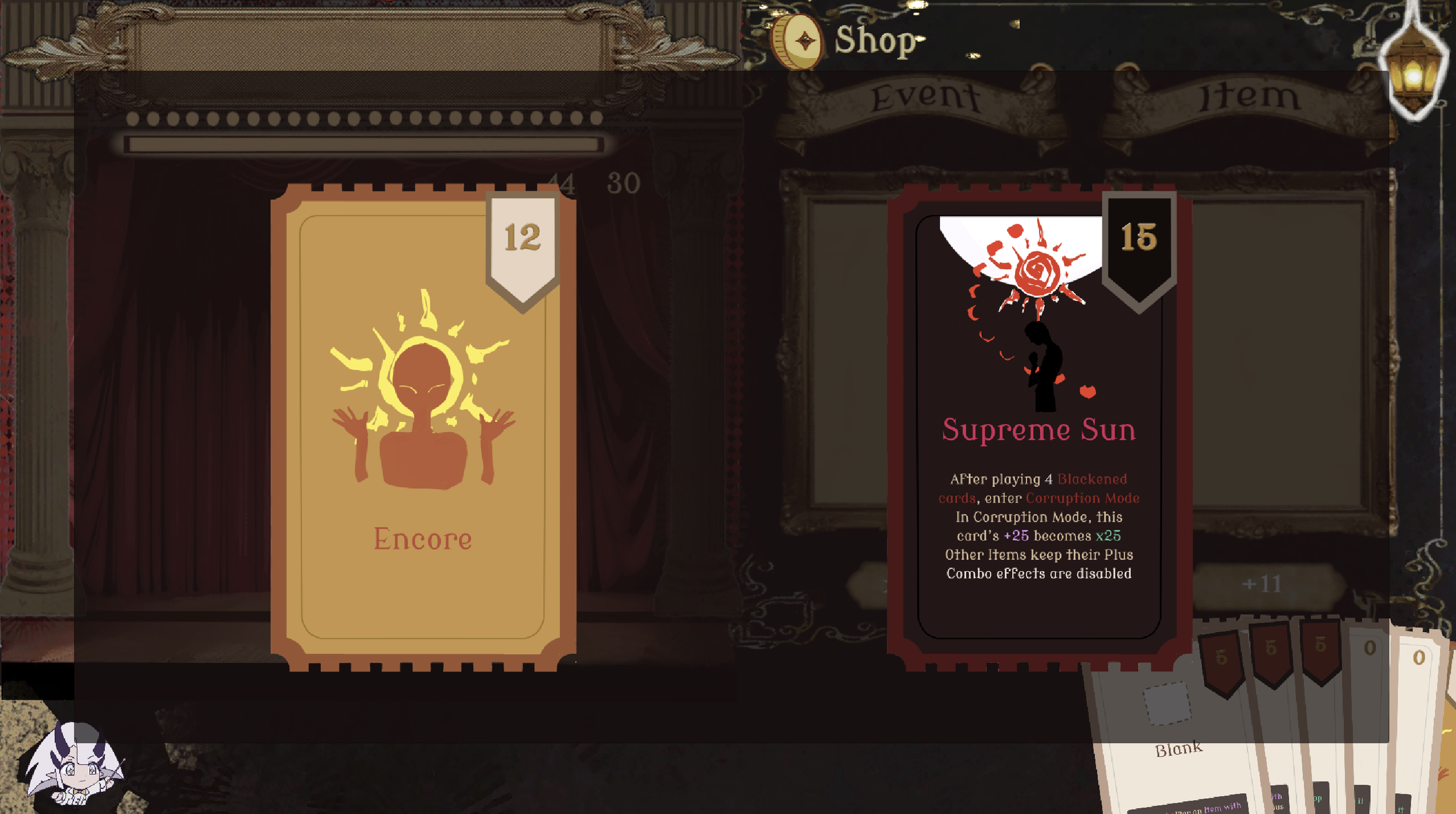
Choosing the "path of least resistance", such as leaning heavily into corrupted or "blackened" rewards, triggers a fundamental mutation of the game's logic. This creates two distinct archetypes of play: a disciplined path focused on stability and optimization, and a chaotic path that thrives on escalation, rule-breaking, and the power found within systemic collapse.